Unit count follows crew size, not square footage. OSHA sanitation guidance is the practical benchmark most Albuquerque general contractors use: one toilet for up to 20 workers, and additional units as headcount climbs.…
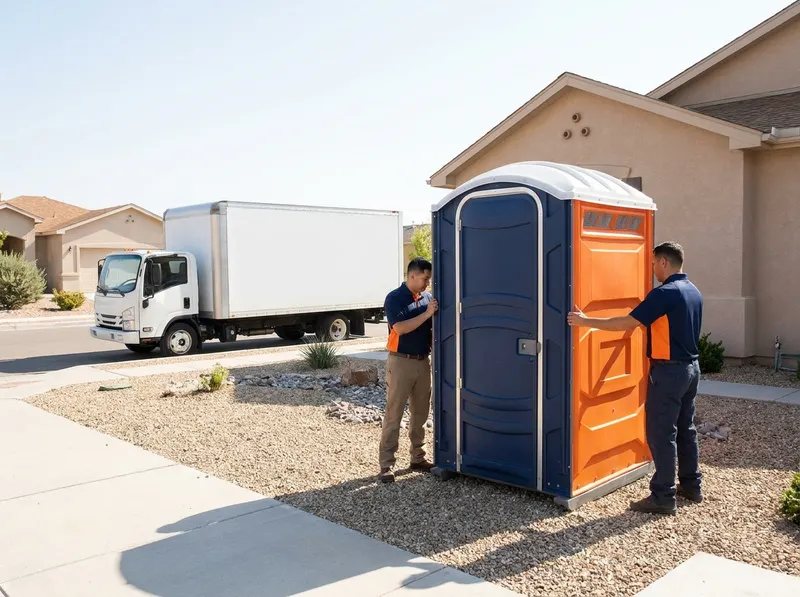
Unit count follows crew size, not square footage. OSHA sanitation guidance is the practical benchmark most Albuquerque general contractors use: one toilet for up to 20 workers, and additional units as headcount climbs. A framing crew of six on a North Valley custom home is a single standard unit. A 40-worker concrete and steel phase on a Downtown or University of New Mexico-area project is a multi-unit set, often with an ADA unit and a separate hand-wash station near the trailer. Weekly service is the default; crews over 20 or sites in July heat often move to twice-weekly pumping to keep tanks manageable.
Placement decides how well the rental works. Albuquerque's West Side subdivisions above Coors — Volcano Cliffs and the newer grades near Petroglyph National Monument — have loose sand and steep pads where a unit needs a compacted, level spot within reach of a service truck, not the bottom of a cut. In the South Valley and Barelas, older lots often mean narrow alleys and utility easements, so we look for a hardstand near the street where the vacuum hose can reach without crossing a live work area. Los Duranes and parts of the North Valley have irrigation ditches and acequia easements that cannot be blocked. Infill work in Nob Hill, Ridgecrest, and Netherwood Park is usually tight-lot construction where the unit ends up on the parkway or driveway apron — worth confirming with the city or your permit before we set it. Tanoan and gated golf-course additions frequently have HOA rules on visible equipment, so a rear-yard placement with a clear truck path is the usual answer.
Wind and sun are the two Albuquerque-specific realities on a long-term jobsite. Spring gusts on open ground near Balloon Fiesta Park or the mesa edge can move an unsecured unit, so we recommend staking, strapping to a fence line, or tucking the unit against a wall or stockpile. Summer sun drives odor, and units sitting in full afternoon exposure hold up better on a weekly schedule with deodorizer at every visit. If a unit needs to move as the build progresses — from the pad to the back lot once framing starts, or off the driveway before concrete flatwork — call ahead and we schedule a relocation rather than having the crew drag it.
A construction rental is the right fit when the site will be active more than about a week and the crew needs a fixed, serviced restroom. A short-term or event-style rental fits better for a one-day demo, a weekend punch-list push, or a single inspection day, where a drop-and-pick with no service cycle costs less. The trade-off runs the other way too: renting month to month is far cheaper per day than repeated deliveries, and pull-off/re-delivery fees add up quickly on a stop-and-start schedule. When a project is likely to pause for permitting or weather, tell us — leaving the unit in place on a reduced service cycle usually beats removing and re-setting it. Bernalillo County and City of Albuquerque jobs each have their own site rules, and we place around whatever your inspector and safety plan require.
Every job gets a firm, written price after a free on-site visit.
Tell us about your construction site portable toilets job in Albuquerque and we'll send a clear, written quote — usually the same day.
 SafeZone Restroom Experts