Weekly servicing is the right fit when a unit is staying put and getting steady use. The practical threshold in Albuquerque is roughly 8 to 10 workers per unit: at that level of traffic, one visit every seven days…
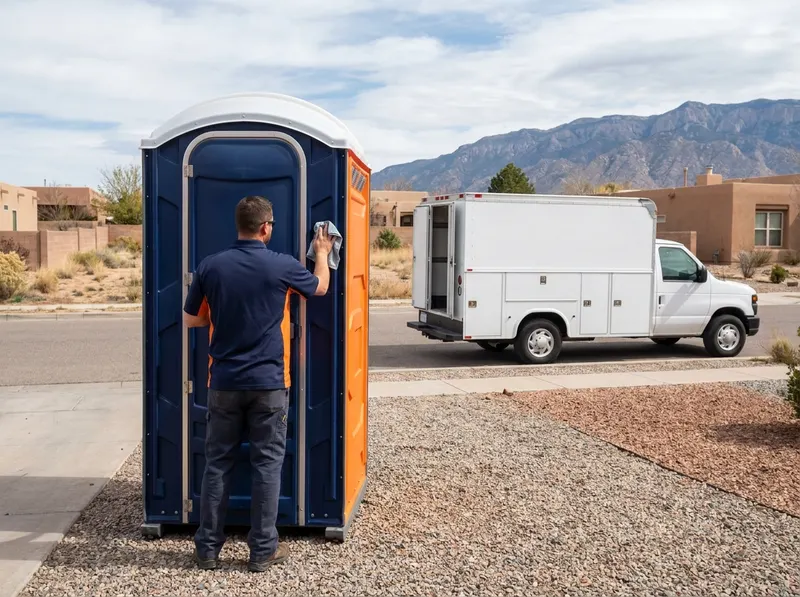
Weekly servicing is the right fit when a unit is staying put and getting steady use. The practical threshold in Albuquerque is roughly 8 to 10 workers per unit: at that level of traffic, one visit every seven days keeps the tank below capacity and the interior tolerable. Below that — a two-person remodel crew in Netherwood Park, a slow-moving casita build off Rio Grande Blvd in Los Duranes — every-other-week or on-call servicing often covers it and costs less over a month. Above that, or on any site with a hard inspection or client-visibility component, twice-weekly is the honest recommendation. Skipping to a longer interval on a heavy-use unit is the single most common reason a site ends up needing an emergency service call, which costs more than the visit that was skipped.
Albuquerque conditions push scheduling in specific directions. Dry air at 5,300 feet evaporates the deodorizer charge faster than it would at sea level, so units on exposed lots — the newer grading work above Volcano Cliffs, staging areas near Balloon Fiesta Park — smell noticeably better with a full water recharge each week rather than a partial top-off. Monsoon weeks in July through September do the opposite: blowing dust cakes the exterior and rain gets in through propped doors, so the wash-down matters more than the pumping. In the Sandia foothills above Tramway, near Ridgecrest and the eastern edges of town, overnight lows in December and January can freeze the tank surface, and winter routes are set up with that in mind.
Access is the other thing that shapes a weekly route, and it is worth sorting out before the first visit. The truck needs a clear path within about 25 feet of the unit, since the vacuum hose only reaches so far. Behind Old Town and through Barelas, the service alleys are narrow and often blocked by parked vehicles, so a unit set at the front of the lot gets serviced reliably while one tucked behind a courtyard wall may not. Gated stretches of Tanoan need a code or a call-ahead contact on file. North Valley properties with acequia ditches and soft shoulders are serviced from the paved drive rather than the field edge. Near the University of New Mexico and through Nob Hill, metered and permit parking means an early-morning slot on the route usually works best. In the South Valley, longer driveways and unpaved approaches are common and fine — the technician just needs to know before arriving.
Billing on weekly plans is typically per unit on a four-week cycle, with a $250 minimum per invoice, and the cycle continues until you call to pause or pick up. Multi-unit sites cost less per unit than a single stand-alone toilet because the truck is already there. Adding an ADA unit or a hand-wash station to an existing weekly stop is cheaper than starting a separate account for it. All figures here are ballparks based on typical Albuquerque jobs — the exact rate is confirmed on a free on-site visit once the route, access, and unit count are known.
Every job gets a firm, written price after a free on-site visit.
Tell us about your weekly cleaning & servicing job in Albuquerque and we'll send a clear, written quote — usually the same day.
 SafeZone Restroom Experts